
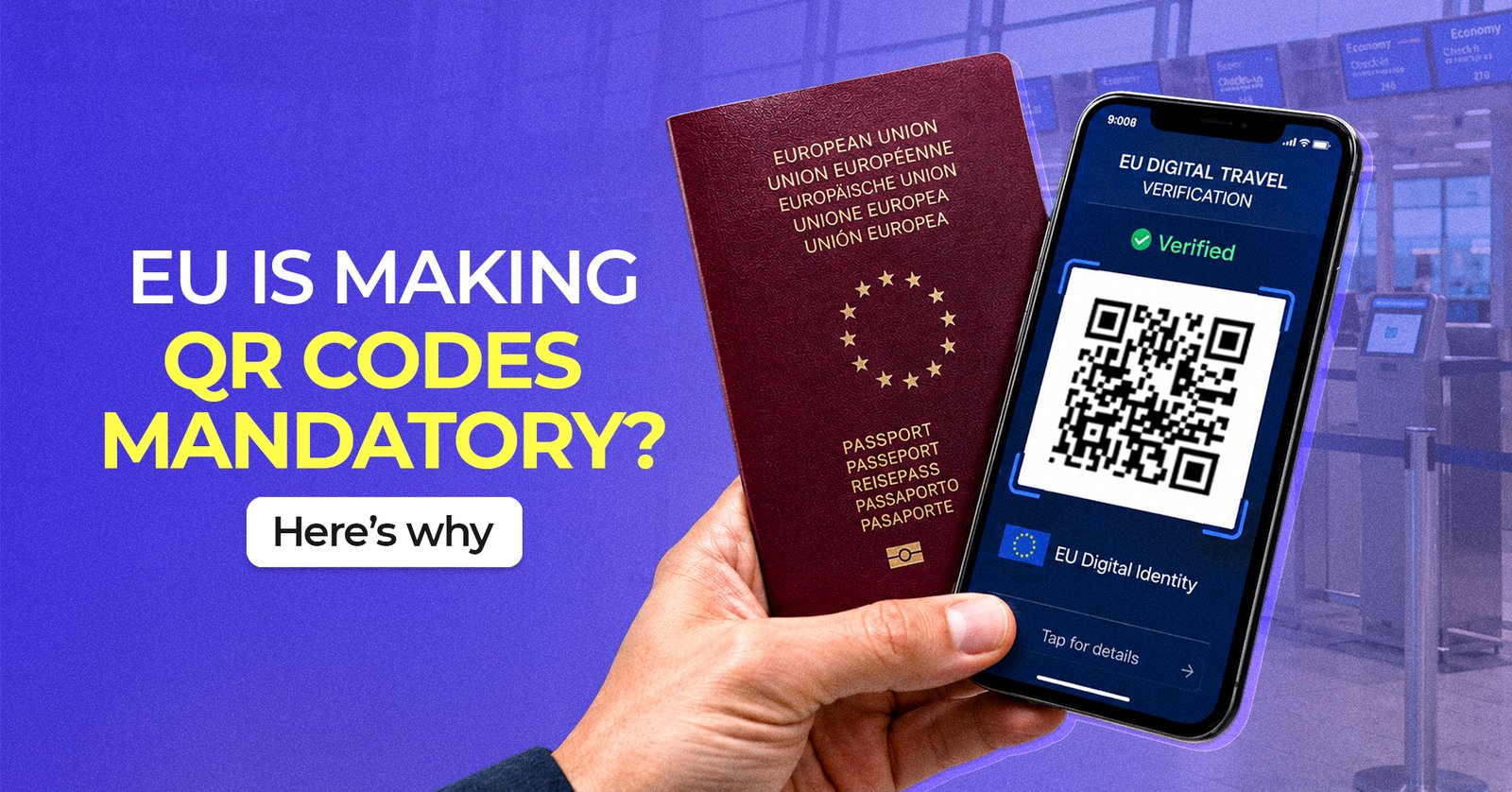
For years, QR codes on products were mostly seen as optional, something brands used for promotions, product details, or the occasional authenticity check.
But that’s changing fast.
In Europe, QR codes are becoming much more than a marketing tool. They’re becoming part of compliance.
The European Union is pushing toward a major shift with something called the Digital Product Passport (DPP), a system that gives products a digital identity accessible through technologies like QR codes.
In simple terms, think of it as a digital profile for a product.
Scan the QR code, and instead of seeing just a product page, you could access important information about where the product came from, what materials were used, how sustainable it is, whether it can be repaired, and even how it should be recycled.
What Is a Digital Product Passport?
A Digital Product Passport (DPP) is a digital record connected to a physical product that stores important lifecycle and compliance information.
The goal is to improve transparency, traceability, sustainability, and circular economy practices across industries.
The Digital Product Passport system is expected to become increasingly important for products sold within the European Union.
Instead of relying only on printed labels, businesses will use technologies like QR codes to provide access to dynamic product information online.
This information may include:
- Product origin and manufacturing details
- Materials and components used
- Sustainability and environmental impact data
- Repairability information
- Recycling guidance
- Compliance certifications
- Supply chain traceability
- Product lifecycle information
The product itself becomes digitally connected through a scannable identity.
Why the EU Is Introducing Digital Product Passports
The European Union’s Digital Product Passport initiative is part of a larger push toward a circular economy.
The idea is simple: products should be more transparent, traceable, repairable, and environmentally responsible.
Consumers today increasingly want to know:
- Where products are made
- How responsibly they were produced
- What materials were used
- Whether they can be repaired
- How products should be disposed of or recycled
Traditional packaging simply cannot hold this level of information effectively.
That’s why QR codes are becoming essential infrastructure for connected product data.
Why QR Codes Matter for the Digital Product Passport
Imagine trying to print every sustainability detail, compliance record, repair guide, and supply chain update directly onto a product package.
Impossible.
A QR code solves that instantly by connecting the physical product to dynamic digital information that can be accessed in seconds.
With a simple scan, customers, regulators, recyclers, and businesses can access updated product information anytime.
This changes how companies should think about QR codes.
A QR code is no longer just a shortcut to a website.
It’s becoming digital product infrastructure.
Why Static QR Codes Won’t Be Enough
This shift also highlights a major limitation of static QR codes.
Compliance information changes. Certifications get updated. Supply chains evolve. Sustainability data improves.
If your QR code points to fixed information that cannot be changed, every update becomes a packaging reprint problem.
That creates unnecessary cost, waste, and operational complexity.
Dynamic QR codes make far more sense for this future.
With a dynamic QR code:
- The printed code stays the same
- The destination or information can be updated anytime
- Compliance updates become easier
- Packaging stays future-proof
- Businesses avoid large-scale reprinting costs
As regulations evolve, flexibility will become critical.
Which Industries Will Be Affected?
The Digital Product Passport initiative is expected to impact multiple industries, especially businesses involved in manufacturing, exporting, and physical product distribution.
Industries likely to see major changes include:
- Electronics
- Batteries
- Textiles and fashion
- Consumer goods
- Automotive products
- Packaging-heavy industries
- Industrial manufacturing
Any business selling products into European markets may eventually need stronger digital product traceability systems.
The Future of Connected Products
Today, this conversation is centered around the European Union.
Tomorrow, it may not be.
Regulations around transparency, traceability, sustainability, and connected product data are becoming stricter globally.
What starts as compliance in one region often becomes an industry standard elsewhere.
That means businesses should not view QR-enabled product data as a temporary trend.
It’s part of a much larger transformation in how products are identified, managed, and experienced.
If your business makes, exports, labels, or sells physical products, this is more than just another regulatory update.
It’s a glimpse into the future of connected products.
And in that future, the most important thing on your packaging might just be a QR code.