
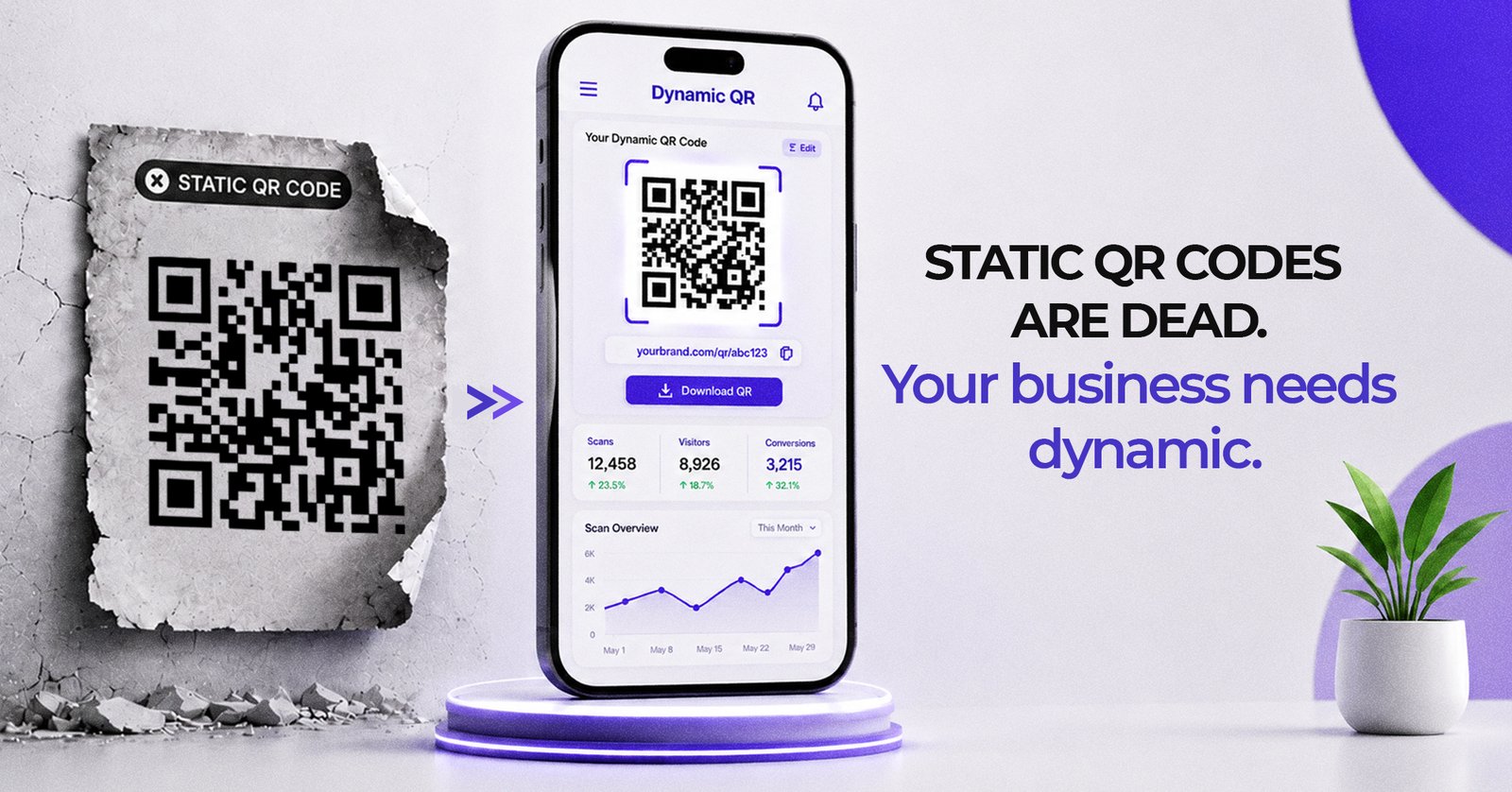
QR codes are everywhere, on packaging, menus, brochures, storefronts, business cards, event banners, and product labels.
But here’s the problem: most businesses are still using static QR codes.
And that’s becoming an expensive mistake.
A static QR code is fixed forever. Once printed, the destination cannot be changed. If your website URL changes, campaign landing page updates, menu gets revised, or product page moves, your printed QR code becomes useless.
That means reprinting materials, wasted money, and a frustrating customer experience.
Dynamic QR codes solve this.
With a dynamic QR code, the printed code stays the same, but the destination behind it can be changed anytime. Want to switch a campaign landing page? Update a restaurant menu? Redirect users to a festive offer instead of your regular homepage? Done. No reprinting required.
And flexibility is just the start.
What Is the Difference Between Static and Dynamic QR Codes?
A static QR code permanently stores fixed information inside the code itself. Once generated, the content cannot be edited or updated.
A dynamic QR code works differently. Instead of directly storing the final destination, it stores a short redirect link that can be updated anytime from a dashboard or QR code management platform.
This means businesses can change where the QR code leads without changing the printed QR code.
That single difference changes everything.
Why Static QR Codes Create Problems for Businesses
Static QR codes may seem simple at first, but they quickly become a long-term limitation.
Here’s why static QR codes are risky for serious business use:
- Links cannot be edited after printing
- Broken pages create poor customer experiences
- Campaign updates require costly reprints
- No scan tracking or analytics
- No flexibility for future marketing
- Printed materials become outdated quickly
If a linked page breaks, gets deleted, or your business evolves, customers hit dead ends.
And dead ends cost trust.
Benefits of Dynamic QR Codes
Dynamic QR codes are built for modern businesses because they provide flexibility, scalability, and data insights.
With dynamic QR code technology, businesses can:
- Change destinations anytime
- Update campaigns without reprinting
- Track scan analytics
- Measure marketing performance
- Run seasonal campaigns
- Create smarter customer journeys
- Future-proof printed materials
The printed QR code remains the same while the digital experience behind it evolves whenever needed.
Dynamic QR Codes Give You Analytics
Static QR codes only redirect users.
Dynamic QR codes provide valuable business intelligence.
You can track:
- Number of scans
- Location of scans
- Device types
- Time-based activity
- Campaign performance
- User engagement trends
That means your QR code stops being just a link and becomes a marketing intelligence tool.
Businesses can use this data to optimize campaigns, improve customer targeting, and measure ROI more effectively.
Why Dynamic QR Codes Save Money
Imagine printing 10,000 flyers with a QR code for a sale campaign.
With a static QR code, once the campaign ends, that code becomes dead weight.
With a dynamic QR code, those same scans can be redirected to:
- A new offer page
- Your homepage
- A lead generation form
- A product launch page
- A festive campaign
- A customer feedback form
No reprinting. No wasted materials. No outdated campaigns.
That makes dynamic QR codes far more cost-effective over time.
Industries That Need Dynamic QR Codes
Dynamic QR codes are useful across almost every industry.
Businesses that benefit the most include:
- Restaurants and cafés
- Retail stores
- Real estate companies
- Event organizers
- Product manufacturers
- Healthcare brands
- Education businesses
- Marketing agencies
Any business using printed QR codes for customer engagement should prioritize flexibility and adaptability.
The Future of QR Code Marketing
QR codes are no longer just simple shortcuts.
They are becoming powerful tools for customer engagement, digital marketing, analytics, and post-purchase experiences.
As businesses evolve faster, printed assets must stay adaptable too.
Dynamic QR codes keep your packaging, menus, posters, brochures, and campaigns future-proof.
Because in 2026, printing a static QR code for serious business use is like printing a phone number you can never change.
The code may stay printed.
Your destination shouldn’t.